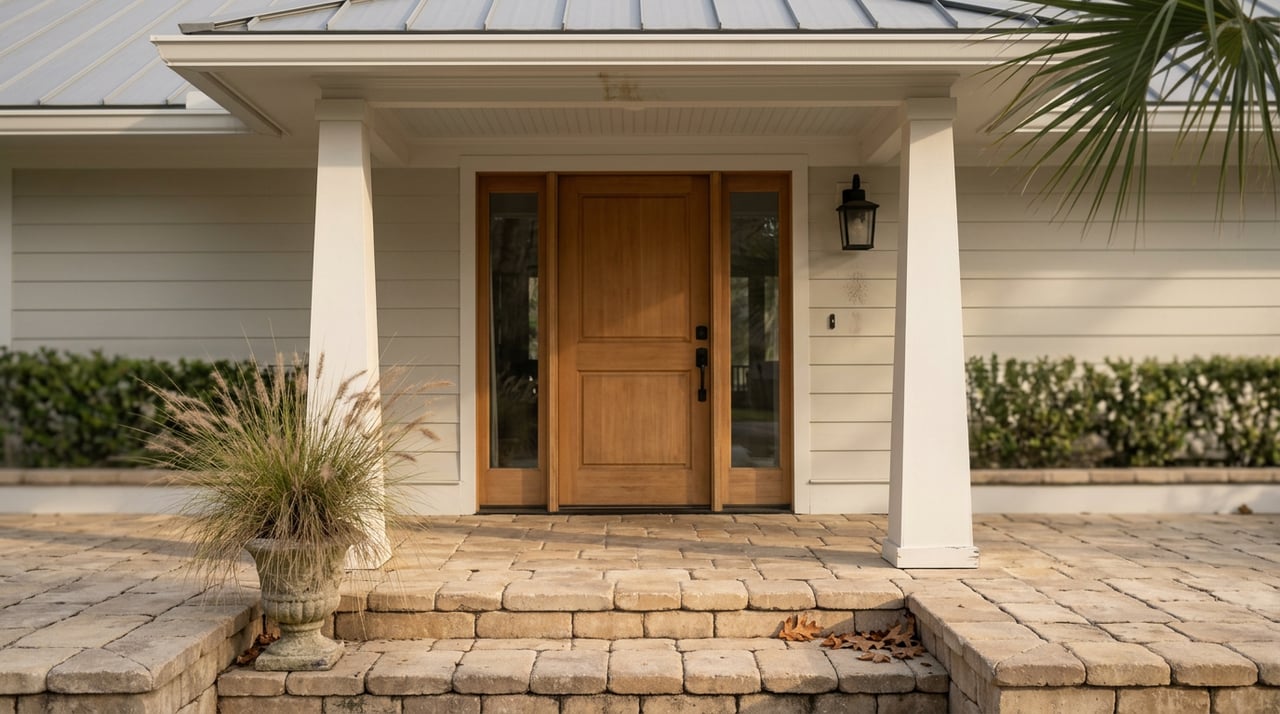
Woodlake Village Homes Pass Inspection. The Insurance Underwriter Asks A Different Question.
September 3, 2026
September 3, 2026
A buyer walks a home in Woodlake Village, loves the layout, and the standard inspection comes back clean. No active leaks, no visible cracks in the foundation, roof looks fine from the ground. Everyone breathes easy. Then, a week later, the insurance quote lands, and it doesn't match what the buyer expected. Maybe it's higher than the same square footage would cost three miles inland. Maybe the carrier wants a separate inspection before they'll even write the policy. Maybe the roof, which looked fine to a general home inspector, gets flagged for a coverage limitation nobody mentioned at the showing.
This isn't a Woodlake Village problem. It's a math problem, and the math applies to every home in the community, because every home in Woodlake Village was built between roughly 1984 and 1998. That single fact, the age of the neighborhood, is doing two jobs at once. It's the reason the HOA fee stays among the lowest anywhere in the Grand Strand's 55+ market. It's also the reason a coastal South Carolina insurance underwriter is going to look at these homes differently than they look at something built in 2015.
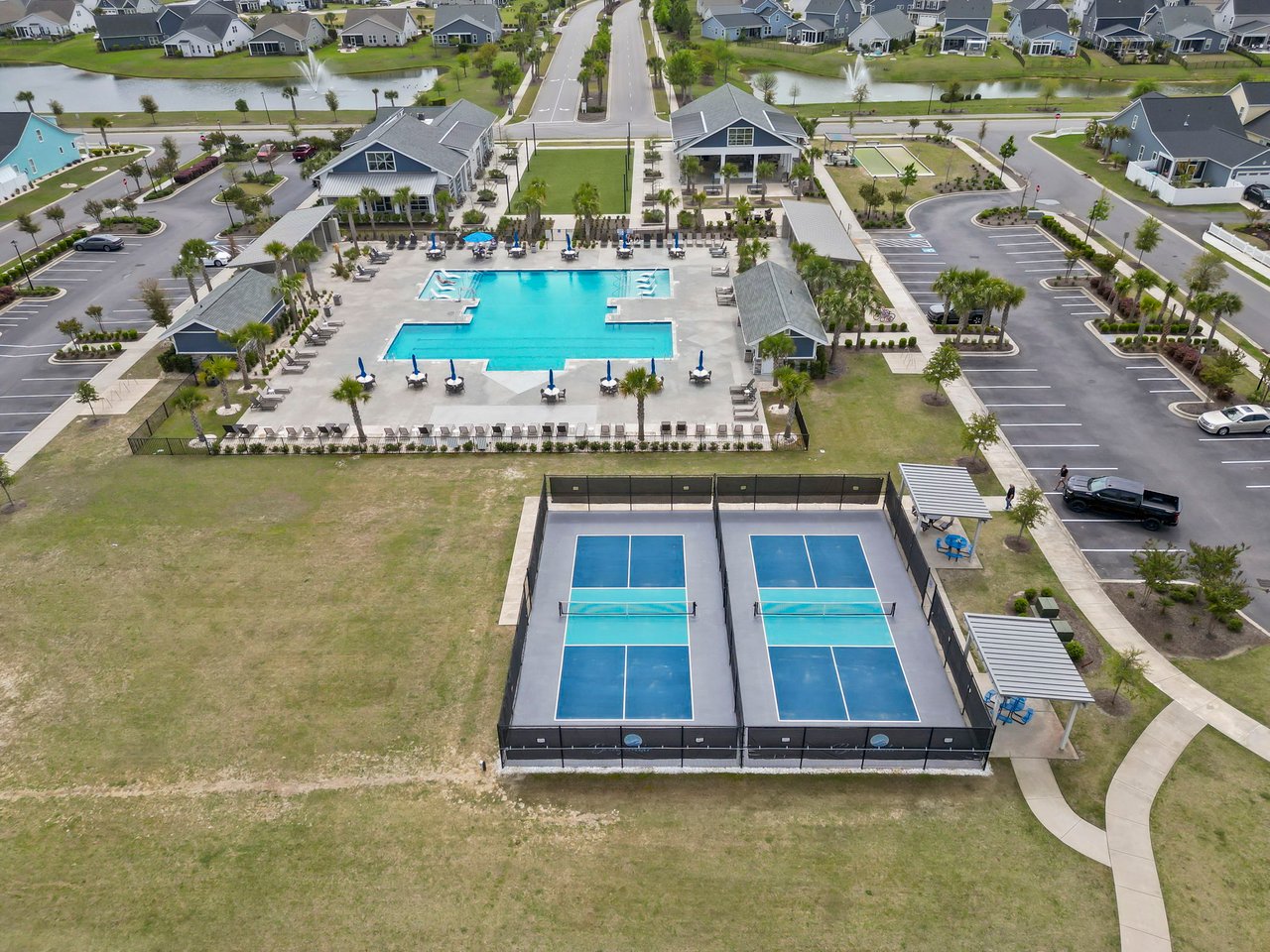
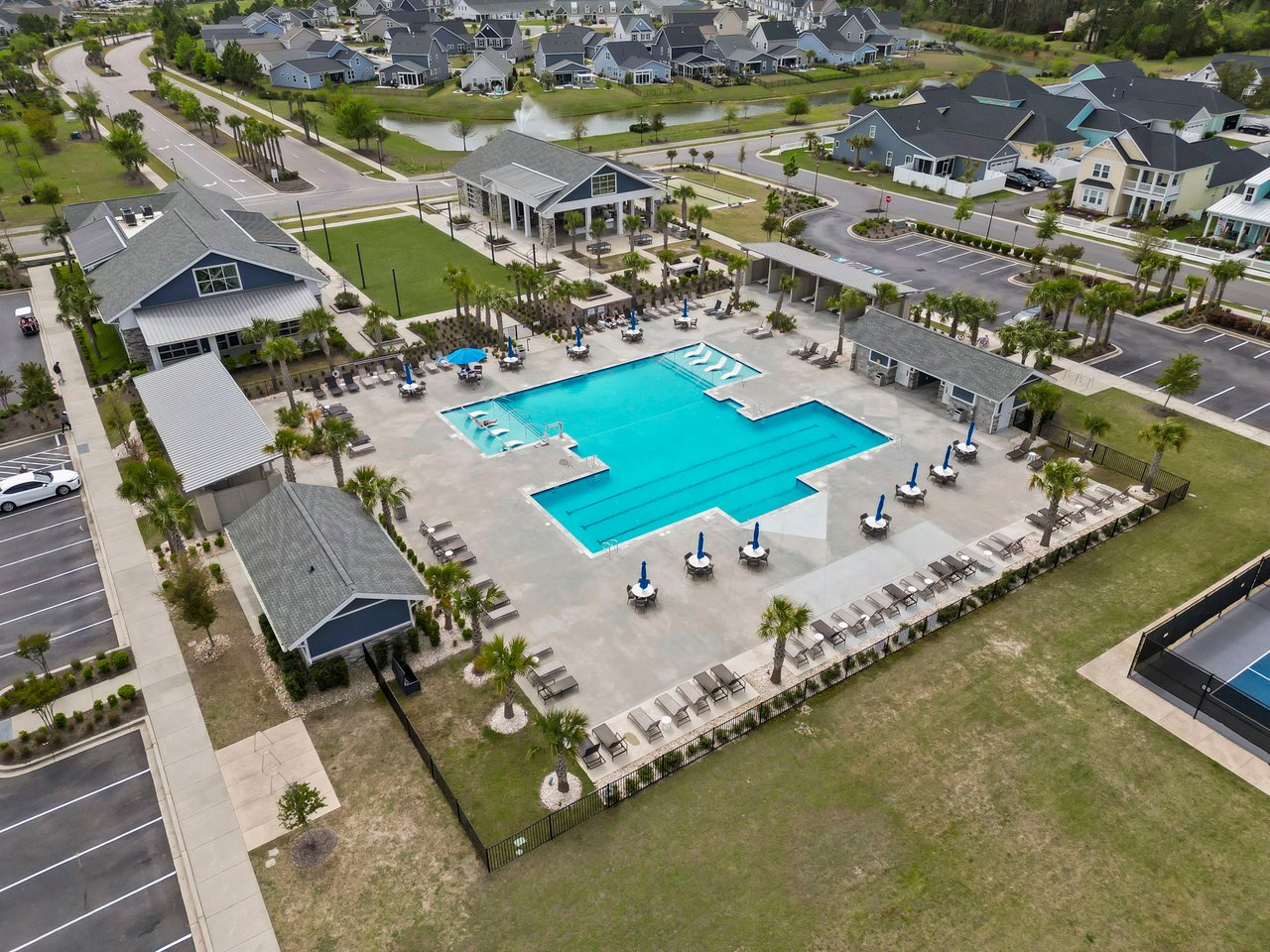
Woodlake Village's HOA covers a clubhouse, an outdoor pool, tennis courts, and common area maintenance, and it does that for one of the lowest fees anywhere in the Grand Strand's 55+ market. That price is real, and it's a legitimate reason buyers are drawn here. But it's not a bargain that exists independent of the neighborhood's age. A 1990s-era community with modest, ranch-style single-family homes simply doesn't carry the amenity overhead or the newer infrastructure costs that show up in a community built in the last decade. The low fee and the age are the same fact, described two different ways.
That trade-off is worth making for a lot of buyers. Lower monthly costs, a quiet cul-de-sac feel, proximity to Garden City Beach and the Murrells Inlet MarshWalk. The problem shows up when a buyer treats the age as a footnote on a spec sheet instead of the variable that shapes everything downstream, including what it costs to insure the home and what an insurer will require before they'll write a policy at all.
Coastal South Carolina insurers have settled on a rough age threshold for enhanced scrutiny: homes over 25 to 30 years old often trigger a mandatory 4-point inspection before a carrier will write a new policy. That inspection looks narrowly at four systems, roof, electrical, plumbing, and HVAC, and it's separate from the general home inspection a buyer orders during due diligence. It typically runs $75 to $150, paid by the homeowner, and the report goes straight to the carrier.
Do the arithmetic on Woodlake Village and there's no ambiguity. A home built in 1998 is 28 years old this year. A home built in 1984 is 42. Every single house in this neighborhood sits on the far side of that 25 to 30 year line, which means the 4-point inspection isn't a possibility for a Woodlake Village buyer. It's close to a certainty.
Roof age carries even more weight in that review, and the thresholds get sharper the older the roof gets:
| Roof age | What typically happens with coastal SC carriers |
|---|---|
| 15 years | Many carriers flag the policy for review at renewal |
| 15 to 20 years | Some will still write coverage, but only with an actual cash value roof settlement instead of full replacement cost |
| 20 years or more | Non-renewal becomes common regardless of how the roof looks from the ground |
Woodlake's HOA doesn't cover individual roofs, so roof age varies home to home depending on whether a previous owner replaced it. That means a buyer can't lean on "the community" for an answer here. The question has to be asked about the specific house, and the answer changes the insurance conversation entirely.
Polybutylene pipe was the standard, affordable plumbing material builders used across the country from 1978 until production stopped around 1995 and 1996, after reports of the material cracking and rupturing from the inside. Roughly two thirds of Woodlake Village's build years, 1984 through 1995, fall directly inside that manufacturing window. The plumbing degrades from the inside, often without warning, and standard home inspectors aren't required to note its presence even when they see it.
Here's the detail that matters for timing. An analysis of properties with polybutylene plumbing found failures averaging around 28.4 years after installation, a shorter window than other pipe materials. A Woodlake Village home built in the late 1980s isn't approaching that failure window. It's already past it.
One thing that doesn't apply here, and it's worth saying clearly because it gets lumped in with plumbing-era anxiety: aluminum branch wiring was mainly installed between 1965 and 1973, well before Woodlake Village broke ground. A buyer touring these homes doesn't need to worry about that particular issue. Knowing which era risk actually applies, and which one doesn't, is the difference between a useful inspection conversation and a vague sense of dread about "old house stuff."
South Carolina requires sellers to complete a Residential Property Condition Disclosure Statement covering the plumbing, electrical, and roof, including the approximate year each system was installed. That's genuinely useful information, and buyers should read it carefully.
But the law is specific about what a seller actually owes. A seller only has to disclose what they actually know. If they've owned the home for a decade and never had a plumber trace the supply lines, they can honestly mark "no representation" on the plumbing question, not because everything's fine, but because they've never checked. That answer looks the same on paper whether the home has been fully repiped or still runs the original 1988 supply lines. The disclosure form tells a buyer what the seller knows. It doesn't tell them what's actually behind the walls.
For a Woodlake Village purchase, the standard home inspection contingency isn't the only checkpoint that matters. A few adjustments to the usual sequence catch problems before they become closing-week surprises:
None of this is a reason to avoid Woodlake Village. It's a reason to sequence the transaction differently than you would for a home built in the last five years, and to have those insurance conversations early enough that they inform your offer instead of derailing it.
Does this mean Woodlake Village is a bad investment? No. It means the age that makes the community affordable is the same age that draws closer insurance scrutiny. Plenty of buyers work through the 4-point inspection process and land coverage that fits their budget. The point is knowing the process exists before you're mid-contract.
Should I ask the seller if a 4-point inspection has already been done? Yes. If a seller has had one performed recently, either for their own renewal or a prior sale attempt, that report can save you time and may even satisfy your carrier's requirement.
Is this specific to Woodlake Village, or true across older Grand Strand communities? The mechanics apply to any coastal South Carolina home in this age range. Woodlake Village is a clear example because its entire build era, 1984 to 1998, sits inside the window where both the plumbing risk and the insurance age threshold overlap.
If you're weighing a home in Woodlake Village and want a straight answer on what a specific property's age means for your insurance conversation and your offer, Brendan Danna has spent the last decade learning these Grand Strand communities floor plan by floor plan. Let's Connect and talk through what your particular house needs before you write the offer, not after.
Stay up to date on the latest real estate trends.
New Construction
A close look at Chesapeake Homes' Bridgewater community — collections, HOA, lake-view lots, and what it actually feels like to live fifteen minutes from Cherry Grove B… Read more
Lifestyle
ShrimpFest dates, new spots that opened in 2026, and how Bridgewater residents are actually using the waterfront this fall.
Get assistance on determining current property value, crafting a competitive offer, writing and negotiating a contract, and much more. Let me guide you through your home-buying journey.

ADDRESS 1297 Professional Dr Ste 201 Myrtle Beach SC 29577